Metal Roof Restoration on a Hawaii Home with Solar Panels
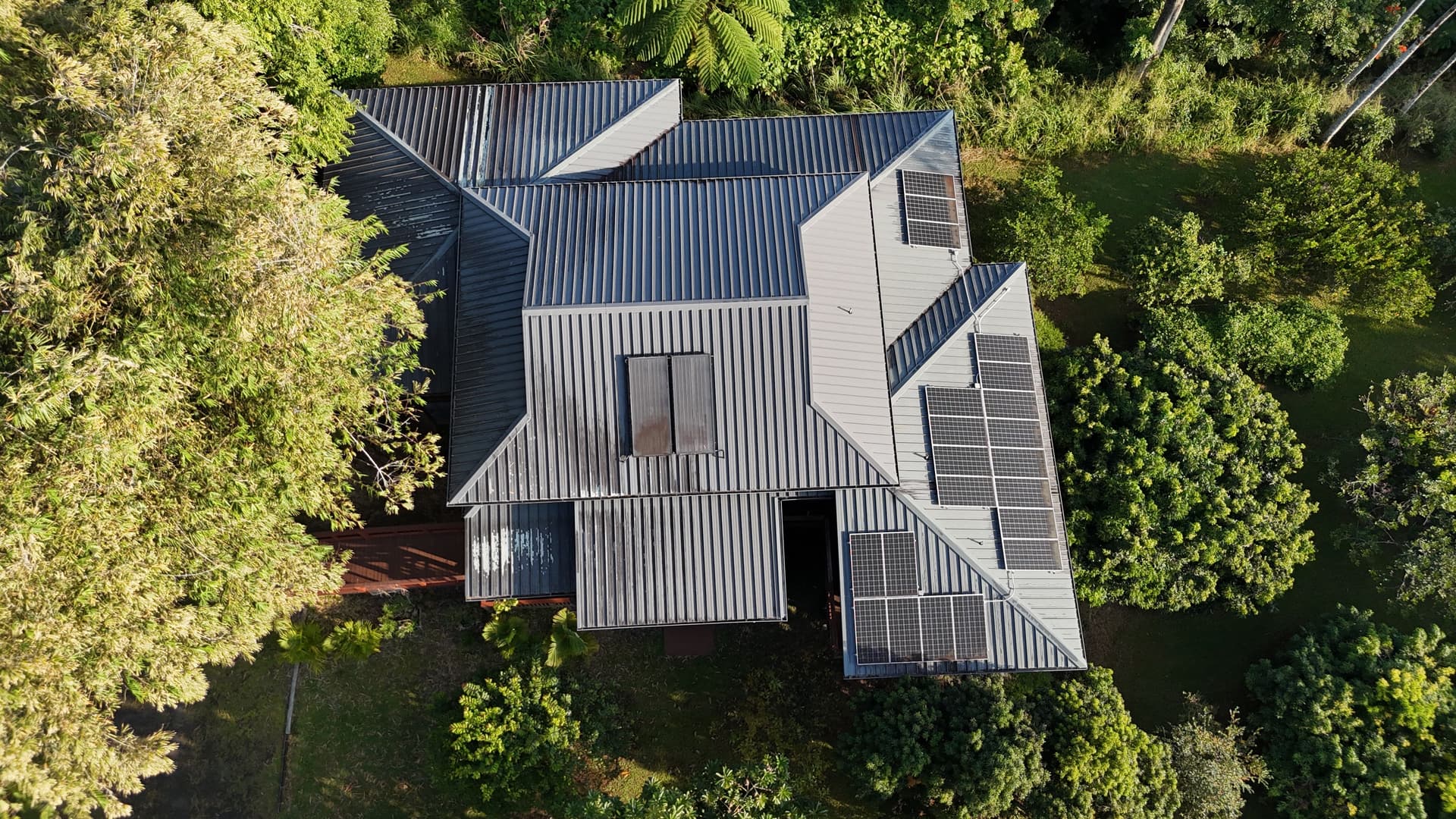
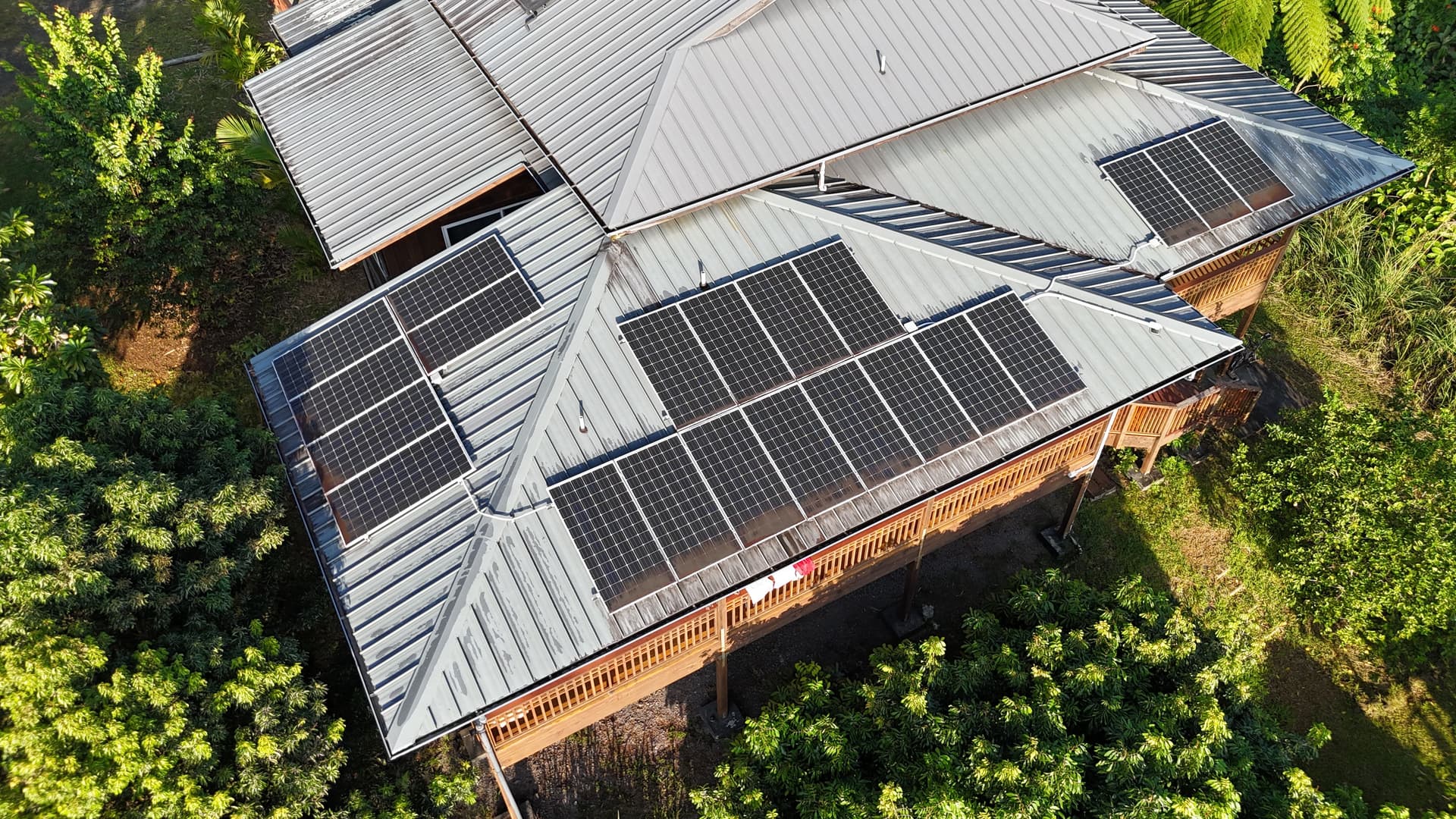
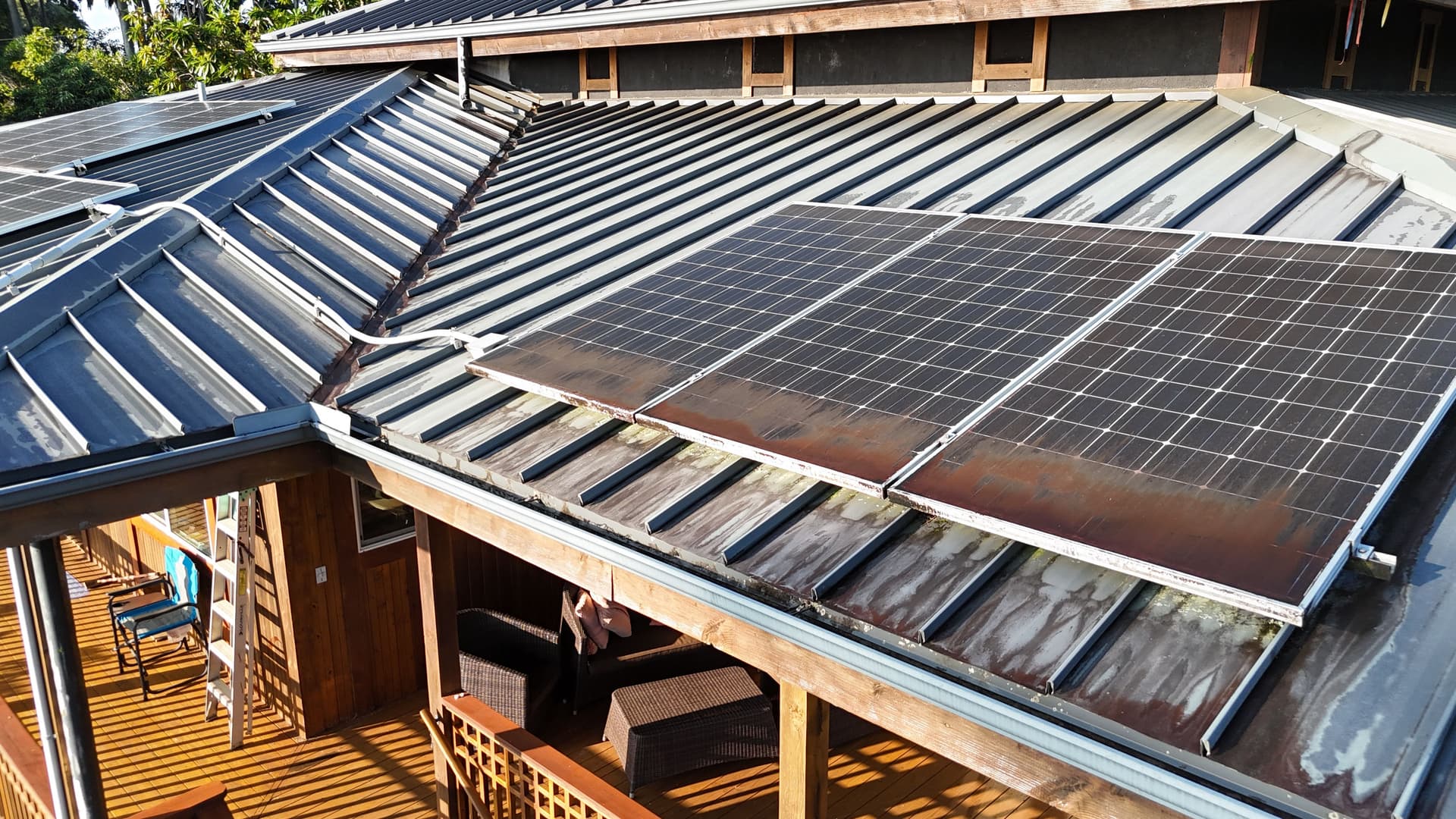
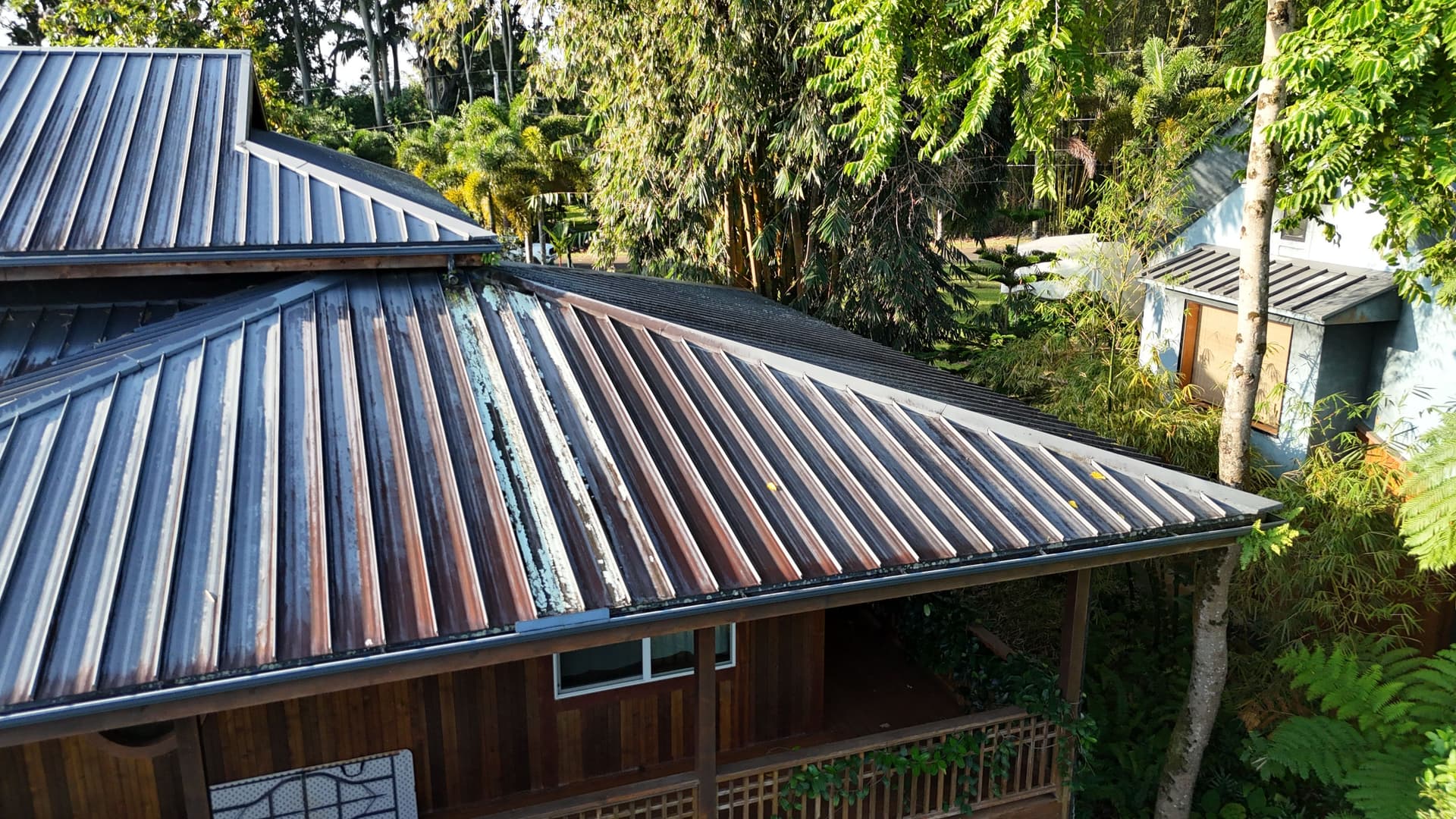
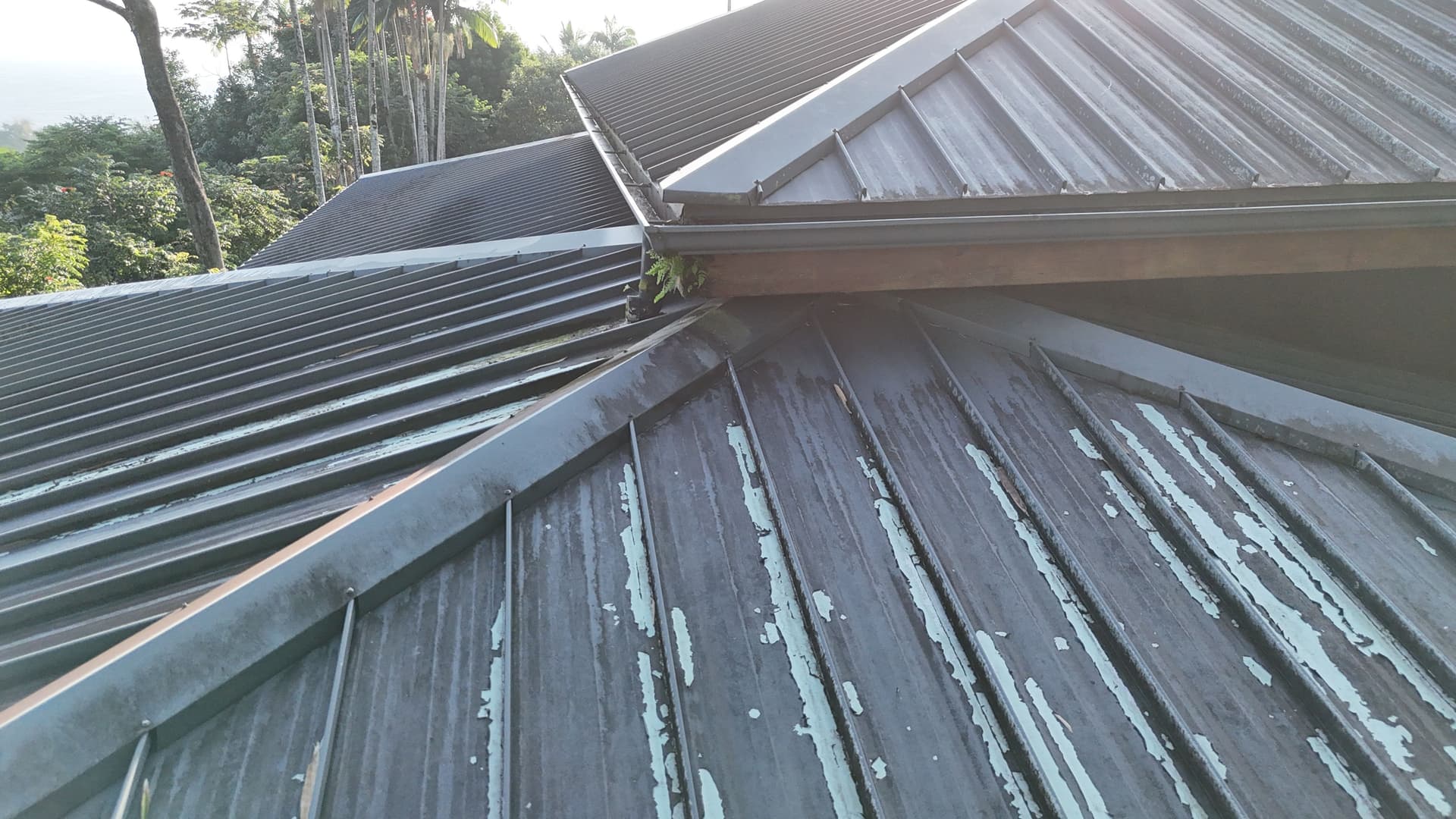
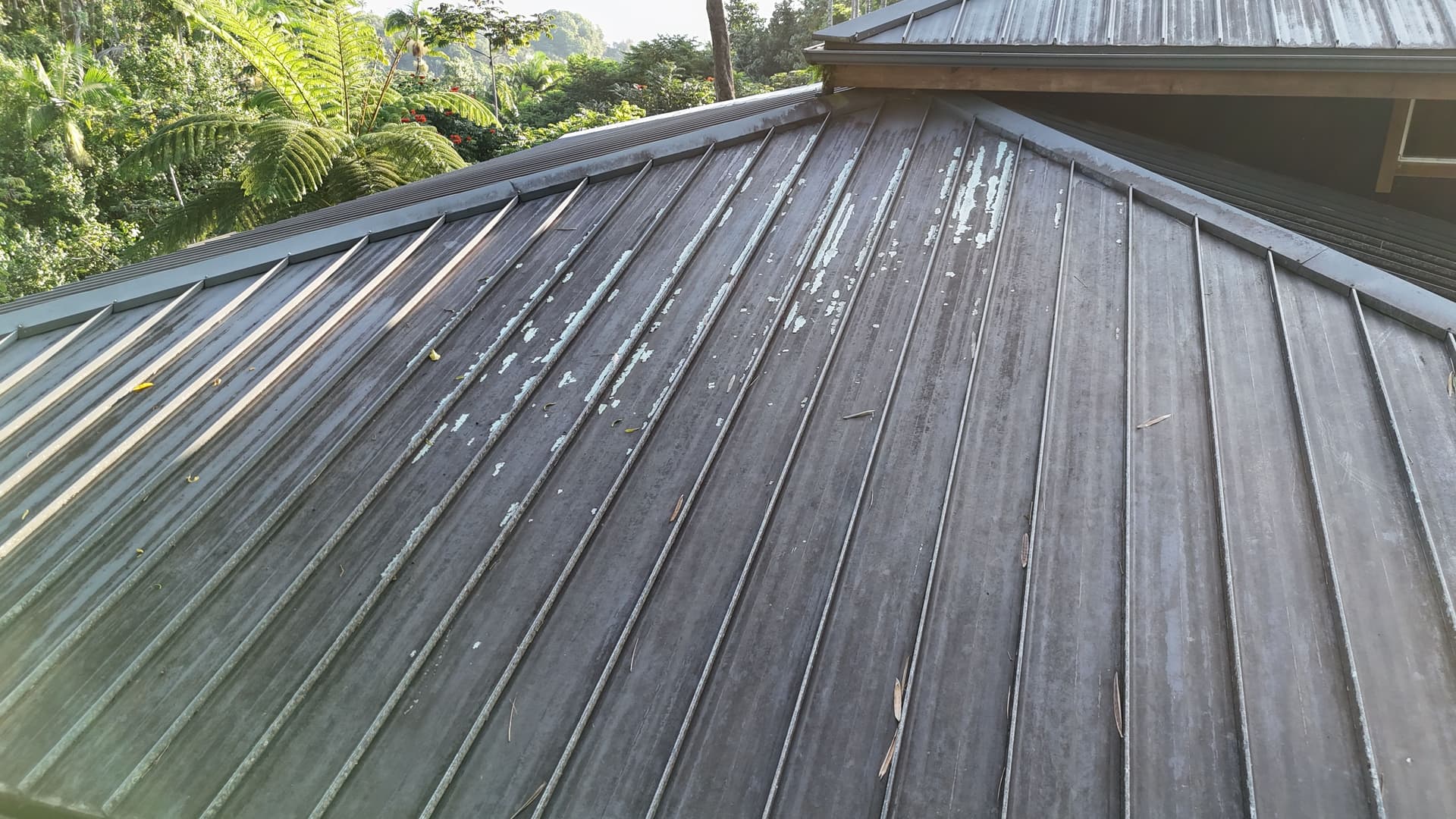
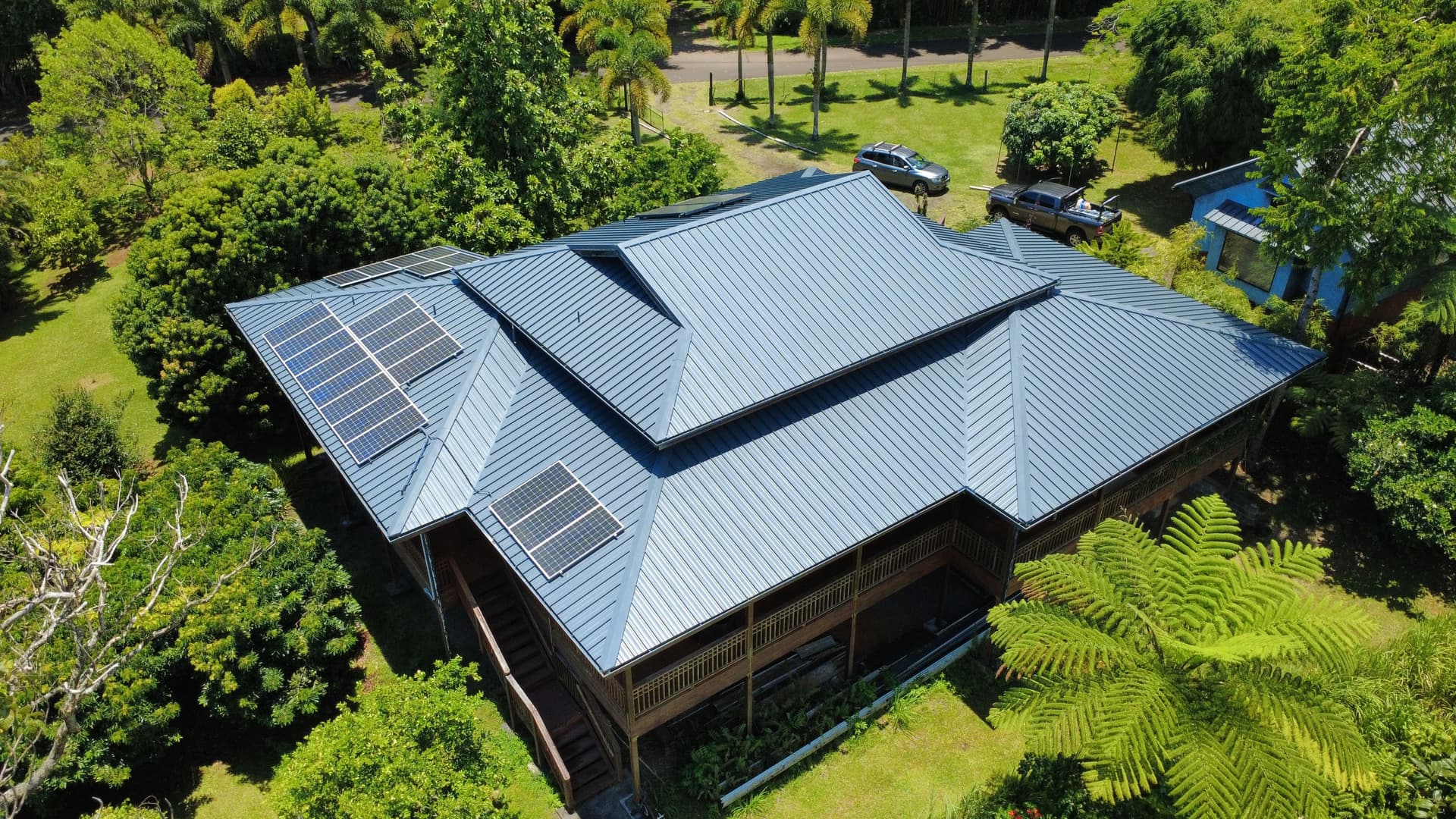
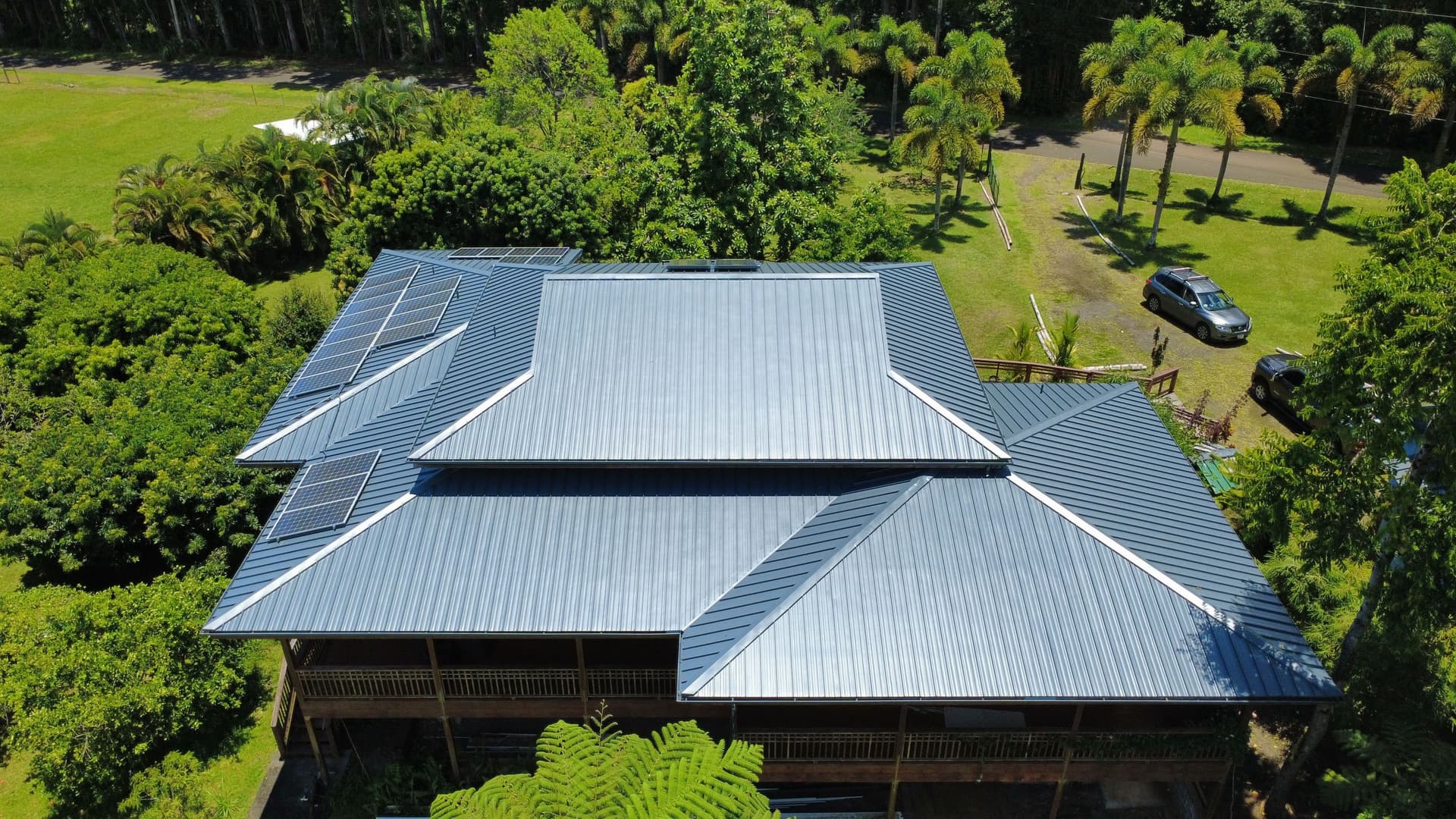
Here's what we were working with - a large multi-level metal roof covered in peeling paint, heavy rust staining, mold growth, and years of buildup. On a property in Hawaii, that kind of deterioration moves fast. The humidity, rain, and tropical heat are relentless, and once a metal roof starts peeling and rusting, it doesn't slow down on its own.
The process started with a thorough roof wash to strip away all the dirt, mold, and loose material. You can't just paint over a mess like this and expect it to hold. That prep work is the most important part. We treated the problem areas - rust spots, mold patches, sections with heavy peeling - before anything else went down. Getting that surface clean and stable is what makes the coating last.
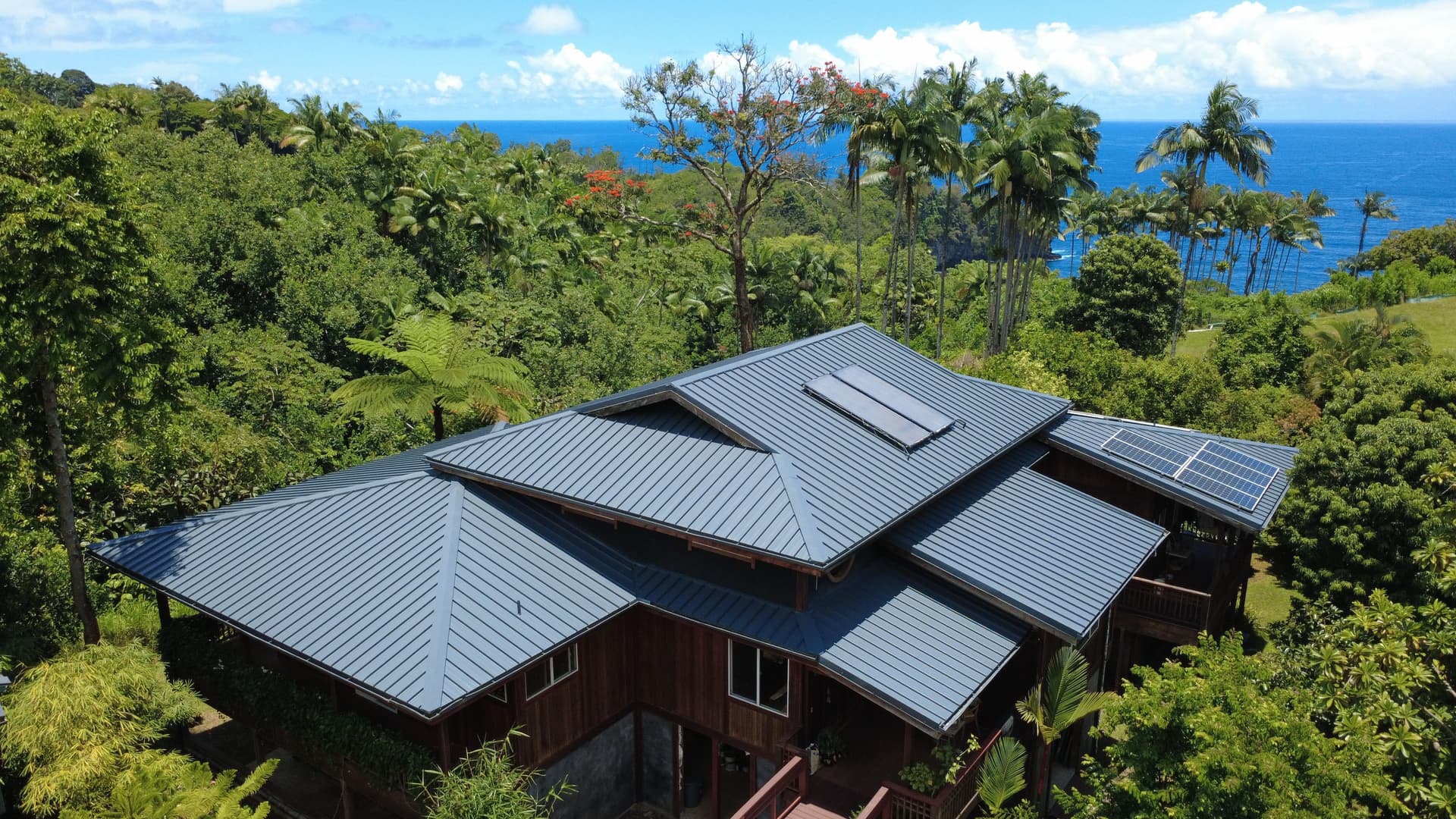
Once the roof was prepped, we applied a premium coating built specifically for Hawaii's conditions. Mold resistance, UV protection, and color retention were the priorities. A metal roof in a tropical climate takes a beating from every angle - sun, moisture, heat, all of it. The coating we use is designed to handle all three, and it keeps working long after the job is done.
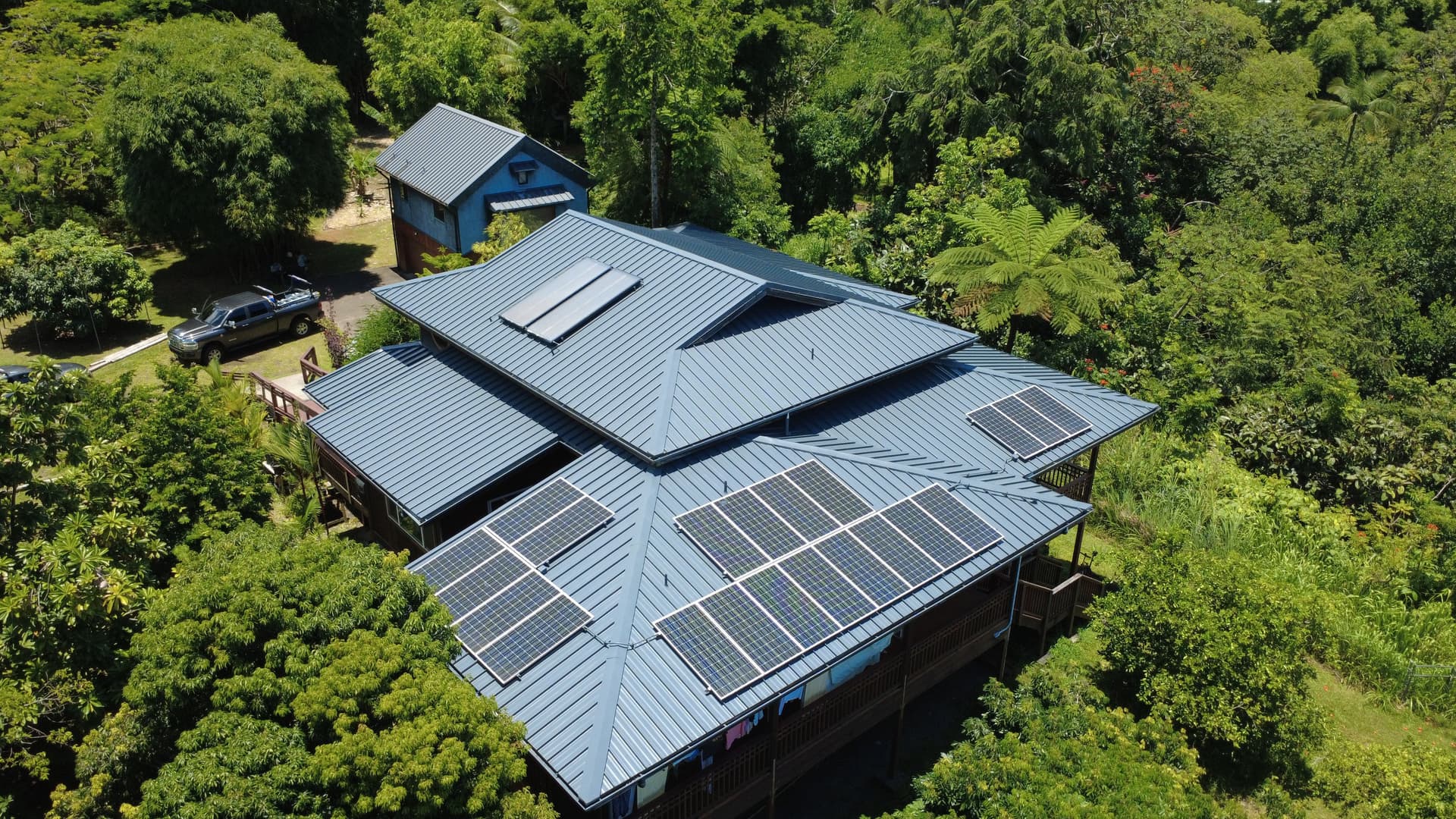
What we ended up with is a completely different roof. Clean, even, sharp color across every panel and ridge. The multi-pitch layout on this home meant a lot of detailed work at the valleys and transitions, but every section got the same attention. The solar panels were carefully worked around, and the finished result looks like a roof that was just built - not one that was on the edge of serious deterioration a short time ago.
A good roof coating does more than look sharp. It protects the metal underneath, slows rust, keeps mold from taking hold, and puts years back on a roof that might otherwise need full replacement. For Hawaii homeowners dealing with peeling, rust, or mold, restoration is almost always the smarter move over a full tear-off and replacement.